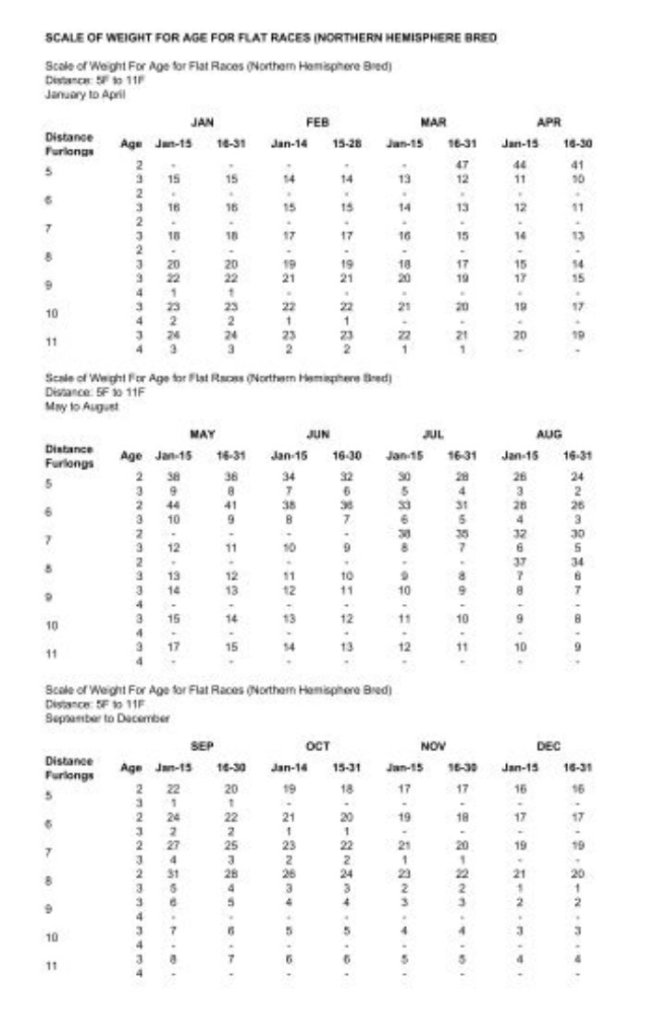
In horse racing, weight for age scales in the UK and Ireland are used to help determine the weight that a horse should carry during a race based on their age and sex.
The idea behind the weight for age scale is that younger horses are generally less developed physically than older horses, so they should carry less weight during a race in order to have a fair chance of winning. As horses get older, they develop more muscle and endurance, so they are able to carry more weight without it affecting their performance.
In general, weight for age scales assign a weight to a horse based on its age and sex. For example, a three-year-old filly might carry 8 stone (112 pounds), while a five-year-old stallion might carry 9 stone (126 pounds). The weights assigned to horses can vary depending on the specific race and the conditions set by the organizers.
The weight for age scale is an important factor in horse racing, as it helps ensure that races are fair and that younger horses have a chance to compete against older, more experienced horses. It also helps prevent injury, as horses that carry too much weight can be at a higher risk for injuries and other health problems.
 TimeWise Chronicles
Leave a comment